Wednesday, July 25, 2012

MEMSO 4.0 Launched! Celebrate with a 20% discount for new subscribers

In May we launched MEMSO 4.0 which introduced a host of usability changes to Medieval and Early Modern Sources Online (MEMSO). New features include easier access and navigation of the entire catalogue, and enhanced research tools (integrating dictionaries, Wikipedia and Google maps) as part of the main interface. Since then, we have rolled out even more features, including making the 'personal bookshelf' functionality easier to access. Lots of other usability tweaks and an updated graphic design mean that MEMSO's place as one of the most innovative historical research tools is maintained.
Meanwhile, MEMSO continues to grow with new titles and content presented in ways that are designed to help historians work with them. We know it's not enough to just digitise an ebook, it's what we do with them to make them usable and accessible to serious researchers that matters.

Subscribe now and save!

Does your institution's library subscribe to MEMSO yet? If not, now is a good time to consider it. Persuade your university to take a trial of MEMSO before August 15th, and qualify them for a 20% discount on the first year's subscription. And remember, if MEMSO doesn't have the books YOU are looking for yet, just ask. Trial requests for institutional libraries can be sent by visiting http://tannerritchie.com/memso/

Personal, short term access affordable to anyone

Did you know that you can access the full power of MEMSO from just $10? You can access the entire collection, including a large collection of manuscripts from the English State Papers, for that low fee. Pay for a longer period, and you also get to download and keep favourite titles at the end of your access time. It's a great way to get all the power of MEMSO at a very low cost, for particular projects, courses, or even just to show your librarian what they're missing. To try MEMSO for size, visit http://www.tannerritchie.com/user/subscribe.php

Follow us on Twitter and Facebook for daily extracts from MEMSO

For a couple of years now, we have been publishing daily tweets on Twitter based on some of the moreunusual material we find in MEMSO. The tweets are just for fun, but tend to lead us in a host of unusual directions. If you're interested in history, the chances are you'll enjoy our extracts, which, while they not be strictly eligible for peer review, have attracted quite an audience. As well as Twitter, you can find extended accounts of the stories we post at Facebook and on our Blog
Recent examples:
  1. Nuns go wild - rebellious nuns take to burning down the monastery in rebellion against Cardinal Wolsey
  2. Women's rights and artichokes in Tudor Ireland. A frustrated dowager chucks vegetables at her oblivious new husband.
  3. A cart of old virgins dressed in cow parts, fit for a queen.
  4. Dwarfs in the courts of Early Modern Europe.
  5. Think your Friday afternoon tutorial is murder? Medieval students were worse.

Designing Web Applications for the Humanities

Do you have a historical database, legacy website or new digital humanities project with which you need specialist help? Historians are increasingly involved in creating or using complex digital resources and websites, but seldom have the experience or technical knowledge to make informed judgements about the correct routes to take. Lack of experience can lead to project delays, cost overruns and expensive adjustments.
TannerRitchie Web Applications (http://trwa.ca) has been working on historical websites and complex digital applications for almost thirteen years, and has built or acted as consultant on a variety of complex applications for universities and private companies alike. Let us know if TRWA can help you make sure your project gets off to the right start.

Wednesday, July 18, 2012

Nuns go Wild

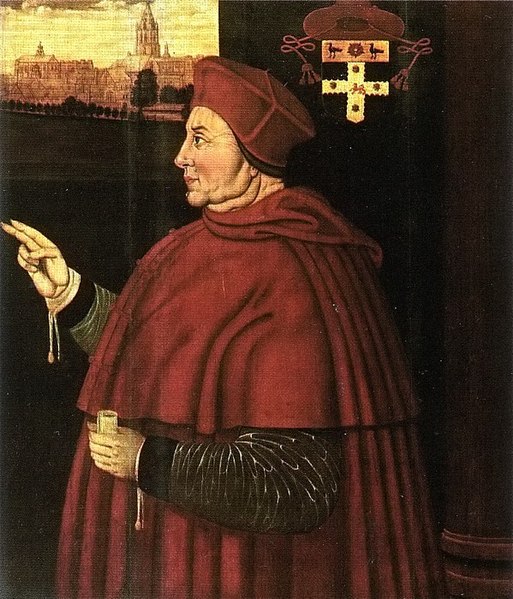
Wolsey

18 July 1528. Thomas Benet writes to Cardinal Wolsey. He has "used every effort to bring over the nuns [of Wilton] to Wolsey's wishes. Found them untoward, and put three or four of the captains of them in ward. Has closed up the doors, that none may have access to the nunnery. Found only a few [supporters] of the new [abbess-]elect and her sisters compliant. As they are now visted by the plague, and much straightened by their lodging by the burning of the dormintory, thought it best to advertise Wolsey before taking further proceedings".

The backstory was a dispute between Wolsey, Henry VIII, and the Boleyn family as to the appointment of a new abbess. Wolsey wanted one Isabel Jourdain, on the basis that she was - ahem - qualified for the job. Anne Boleyn wanted Eleanor Carey, a kinswoman by her sister's husband. However it was discovered that Carey had 'two children by sundry priests', and was having an affair with a household servant. Therefore Boleyn and the Carey's suggested Eleanor's sister instead, while attempting to smear Louvain's reputation with accusations of lack of chastity.

Henry VIII attempted to solve the dispute by ruling out all the candidates - both the Careys and also Louvain, but Wolsey went ahead and appointed Isabel Louvain anyway, thus sparking the first major disagreement between Henry and Wolsey as to authority over the church.

A nun, possibly

The 18 July letter appears to show a state of chaos at Wilton Abbey, with fires and open rebellion against Wolsey's candidate mixing with an outbreak of the plague to create what can only be described as 'an unholy mess'.

Thursday, July 12, 2012

Women's Rights and Artichokes in Tudor Ireland

Mary Tudor and Charles Brandon. Mary is holding an artichoke, doubtless about to thrown at some ignorant male noggin or other. See here for the symbolism implied by the artichoke, which coincidentally also referred to a widow's loss of status when she remarried.
Joan, dowager countess of Ormond, states a common complaint of aristocratic women while in conversation with Brian Jones, constable of Carlow. While the conversation was taking place, her 2nd husband was asleep on a pallet nearby.

"Whiles I was a widow [to James, E of Ormond] and had not married an Englishman [Francis Bryan], I defended and kept my own [property], or at the least, no man went about to defeat me of my right. Well is the woman unmarried; [for now] I am bade to hold my peace, and [instructed] that my husband shall have answer made unto him."

Joan then gave vent to her frustration in more tangible form. Having about her a large number of artichokes, taken from the Lord Deputy of Ireland's garden, she "full familiarly threw all the artichokes at [her husband] one after the other".

The full document can be read below, and goes on to to describe Joan's wish to defend her rights, but realisation that she was unlikely to succeed: 

Wednesday, July 11, 2012

A cart of old virgins.

Sometimes real history is beyond anything that Baldrick cooked up in Blackadder.

Question: The Queen's coming to town. How should we welcome her?

Answer: A float of old virgins dressed in cow parts? You betcha!

11 July 1613: To honour Queen Anne's visit to Rodney Stoke, the Tanner, Chandler and Butcher trades presented the Queen with 'a carte of olde Virgines, the carte covered with hides and hornes, and the Virgines with their attires made of cow tayles, and braceletts for the necks of hornes'.

Further note. A) Tanners have clearly always been awesome. B) This is the sort of out-there fun that Sigmund Freud has totally ruined. I for one hunger for the day when innocent older ladies could be dressed in the offcuts of a cow without gving rise to any smirking.

Sunday, June 3, 2012

Announcing MEMSO 4.0: New Look, New Features

We're pleased to announce that the much anticipated latest version of Medieval and Early Modern Sources Online (MEMSO) has been launched this weekend. Introducing a new, improved, look, and new features including better integration of the complete catalogue into the main interface, and new tools to help you work with dictionaries and encyclopedias right from within MEMSO, MEMSO is more than ever a resource built by historians for historians.


Monday, February 20, 2012

Dwarfs in the courts of Europe in the early modern period

The diverse roles of dwarfs in early modern society - especially aristocratic society, appear surprisingly often in the pages of Medieval and Early Sources Online (MEMSO), often enough that the contradictory positions of aristocratic favour and aristocratic abuse that people affected by dwarfism found themselves in become readily apparent. Short stature opened doors into the richest houses of Europe for such people, but at the price of loss of liberty and/or the chance of leading anything like a normal life.

Dwarfs were welcomed into royal courts because of their novelty and even fashion value, where they lived beside other court peculiarities such as the court jester. For instance, Mary of Guise kept both a a female jester, called Serat, and a dwarf called Jane in Scotland during the 1530s.

The benefits of being at court were mixed at best, as the mentioning of dwarfs in the same breath as jesters suggests. In the court of Mantua the Marchioness viewed her two dwarfs in the same way she might have viewed hunting dogs - marrying them and then disposing of one of their children as a gift to a friend as she might have given a puppy.

Yet in other places, dwarfs were held with affection to the degree that they were allowed unusual liberties in aristocratic society. A dwarf named Jemmy [Jamie] was employed by the Steuarts of Grandtully at Murthly Castle in the early 19th century, where he was employed as keeper of the inner gatehouse, and worked on various tasks from weeding the court, counting the fowls sent as rent, and fetching mail.

Somehow, as well as these tasks, Jemmy acquired the liberty to 'make his appearance in the dining-room', at meal times, whereupon he would sit on the floor and make observations on the conversation, including remarks of 'caustic bitterness' against anything he heard with which he disagreed. He would also wander into some of the women's bedrooms before they were up in the morning, and talk to them 'until it was time to rise'.

Unfortunately, as the castle passed to a new master, Jemmy found himself in less tolerant surroundings. The new laird both hated and was hated by Jemmy, yet the laird stopped short of dismissing him entirely from his service.

Accordingly the Redbook of Grantully records that Jemmy spent his later life 'eating and making love to lady's-maids, and he died partly from the loss of his sweethearts, on whom he made verses, and partly from the discountenance of the cook'.

By the time he died, he had saved between £400 and £500 from his wages - a sum that the National Archives estimates as about £25,000 in today's money.

Friday, February 10, 2012

Bad booze and beatings in medieval Oxford - The Scholastica Day 'riot'

Medieval boozers.
10 February 1355, town versus gown friction in Oxford reached an all time low. The St Scholastica Day Riot (surely a more proper name would be 'massacre') over bad beer wine erupted when a slanging match and a thrown tankard led the tavern owner and the mayor to call the townspeople to arms in retaliation. 2000 men raided Oxford colleges in search of the original instigators, killing 63 scholars. The scholars were hardly innocent in events either - two of them had provoked the retaliation by beating the tavern owner, then 200 had gathered around them and roughed up the mayor before the town finally responded. During the rioting as many as 30 townspeople were also killed, bringing the total deaths to as many as 93.

Despite the horrendous behaviour on both sides, only the townspeople were punished, and ordered to say mass every subsequent St Scholastica Day, and pay a fine of a penny for every scholar killed. Bad feeling continued for centuries to come, and in 1575 the university claimed 15 years breach of contract - even though the mass had been illegal since the accession of Elizabeth I. The payment of fines continued until 1825, when the mayor refused to take part, but a formal reconciliation did not occur until 1955, just 600 years after the events concerned.

One might ask why this event is not more notorious. For comparison, only 38 men were murdered at the notorious Glencoe Massacre (although 40 more [men, women and children] died of exposure subsequently). The massacre of Jews at York, perhaps numerically the largest ever massacre in mainland Britain (although dwarfed by some of the massacres that have happened in Ireland), saw 150 die in 1190. By any measure the Scholastica Day Riot deserves to be better known.

More details at:
http://en.wikipedia.or/wiki/St_Scholastica_Day_riot
http://organizations.ju.edu/fch/1993miller.htm